
This Earth Day, our Environmental Division is showcasing recent riparian restoration work completed across Simpcwúĺecw (Simpcw Territory), demonstrating the effectiveness of nature-based solutions in stabilizing streambanks and improving ecosystem health.
The projects focuses on restoring erosion-prone riparian areas using live staking and fascine installation, techniques that rely on native, locally adapted plant materials, primarily willow species, to rebuild natural stability along waterways.
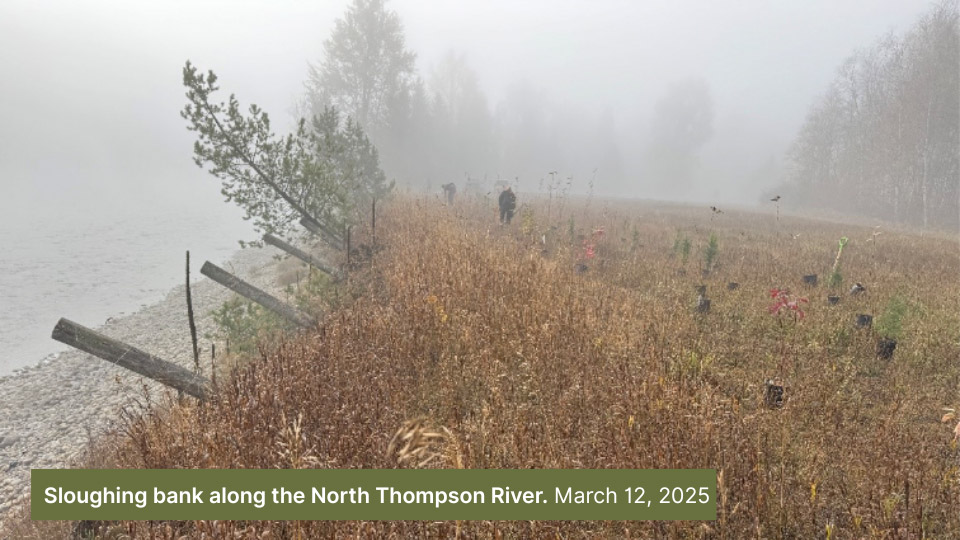
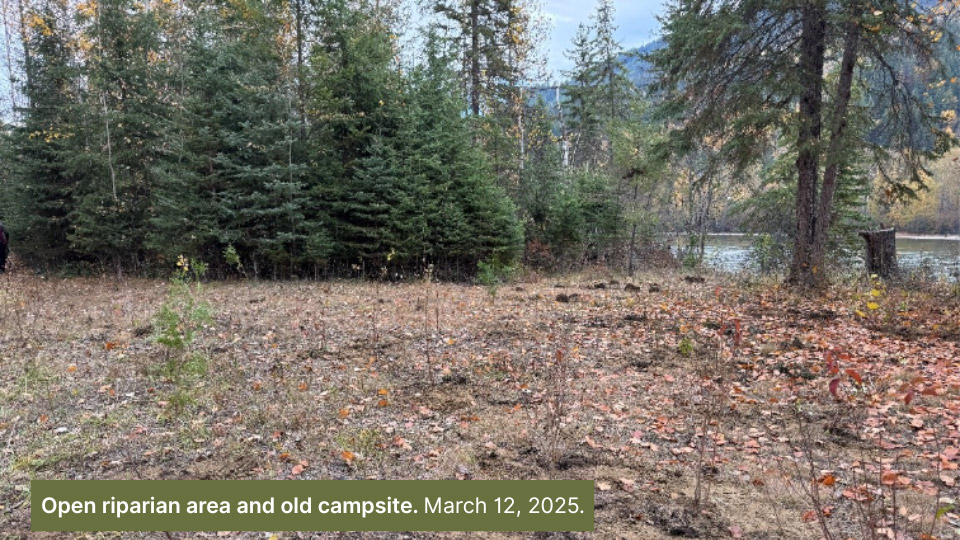
Live staking involves harvesting dormant cuttings and installing them directly into streambanks, where they take root and grow. As these plants establish, their root systems bind soil together, reducing erosion and increasing slope stability. Fascines, buried bundles of live branches installed along the contour of the slope, provide immediate reinforcement while also rooting over time to create long-term structural support.
These approaches are widely used across British Columbia as part of riparian restoration and climate adaptation strategies. In addition to stabilizing banks, they provide multiple environmental benefits, including:
- Improved fish and wildlife habitat
- Enhanced water quality through reduced sedimentation
- Increased resilience to flooding and high-flow events
- Support for native plant communities
Project photos show progression from initial installation in early spring through to early establishment in the following months, highlighting how quickly these systems can begin to take effect when properly designed and implemented.
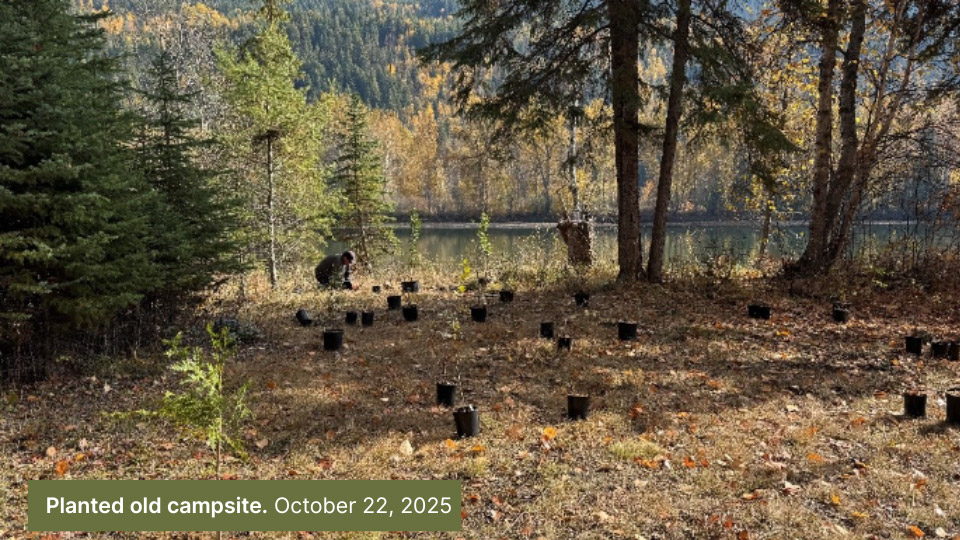
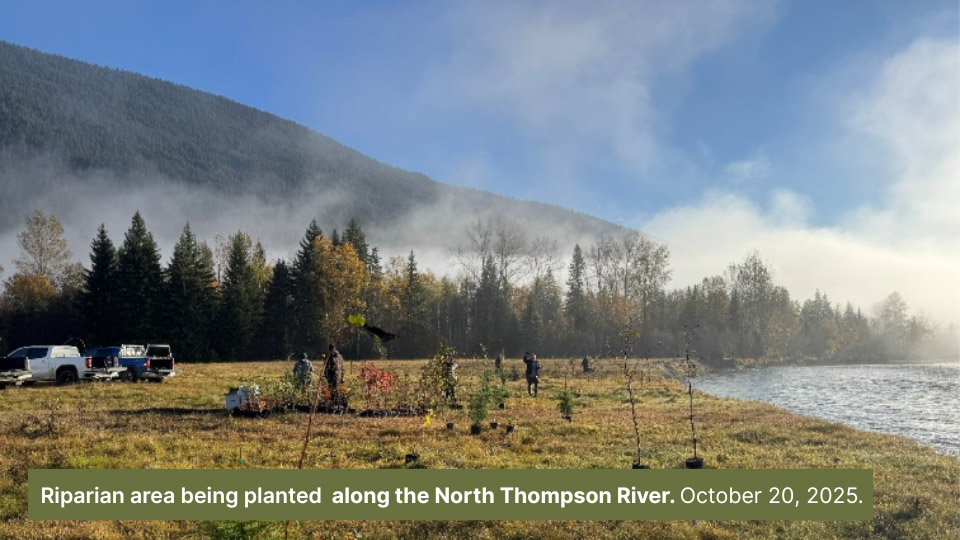
A critical component of this work is the selection and handling of native, locally adapted plant species, combined with precise installation techniques in often challenging or hard-to-access environments.
These projects reflect our team’s ability to deliver practical, effective restoration solutions while upholding a deep commitment to land stewardship.
